



All on 4, Implant Dentures or Dentures? Your Complete Guide — Leicester & Corby (2026)
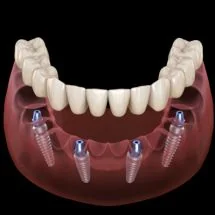
Comparing dentures vs implant-retained dentures vs All-on-4 in Leicester and Corby? This complete 2026 guide breaks down every option — costs, function, longevity and aesthetics — so you can make the right decision for your smile.
Losing most or all of your teeth is one of the most significant things that can happen to your oral health — and to your confidence. But the good news is this: you have more options than ever before. The challenge is understanding what those options actually mean in practice, and which one is right for you.
From conventional full dentures to the most advanced all-ceramic fixed implant bridges, this guide walks you through all four main ways of replacing a full arch of missing teeth. We explain what each involves, what it costs in Leicester and Corby in 2025, and — most importantly — what it actually feels like to live with.
At Natural Smiles, with clinics in Wigston, Leicester and Corby, Northamptonshire, we believe that an informed patient makes a better patient. So here is everything you need to know — no jargon, no sales pressure, just straight answers.
Quick summary
Your four main options are: 1) Full denture — affordable, no surgery, but poor stability and ongoing bone loss. 2) Implant-retained denture — removable but anchored by 2–4 implants, significantly more stable. 3) All-on-4/6 FP3 — fully fixed, same-day teeth, pink acrylic gum for patients with bone/gum loss. 4) All-on-4/6 FP1 — the gold standard, fully fixed ceramic teeth, most natural-looking of all.
The Four Options Explained
Option 1: Full Denture (no implants)
A conventional full denture is an acrylic plate carrying a complete set of artificial teeth that rests directly on the gum. It is held in place by suction — or, in many cases, by denture adhesive. Remove it at night for soaking.
Full upper & lower dentures
For generations, full dentures were the only option for patients who had lost all their teeth. They remain a valid choice for patients who cannot or do not wish to undergo surgery, or who face significant budget constraints. However, they come with well-known limitations: they move during eating and speech, they restrict diet significantly, and — critically — they do nothing to prevent the bone loss that begins the moment teeth are extracted. Over years, this bone loss causes the characteristic ‘sunken’ facial appearance that becomes increasingly difficult to reverse.
Option 2: Implant-Retained Denture
An implant-retained denture (also called an overdenture or snap-on denture) uses 2–4 dental implants to anchor a conventional-style denture firmly in place. The denture clips or snaps onto the implants, eliminating the movement and instability of conventional dentures.
This is a life-changing upgrade for patients who have struggled with conventional dentures. Eating becomes dramatically easier, speech improves, and patients no longer need adhesive. The denture is still removed at night for cleaning — but during the day it behaves as a stable, secure set of teeth. The implants also begin to preserve bone at the points where they are placed, slowing the resorption process.
It is particularly well-suited for patients transitioning from dentures, or those with limited bone volume who might not be immediately suitable for full fixed implant treatment.
Option 3: All-on-4/6 — FP3 (Fixed Hybrid Bridge)
The All-on-4 technique uses four to six strategically placed implants to support a complete arch of teeth that is permanently fixed in the jaw — not removable by the patient. FP3, in the Misch prosthetic classification, means the bridge replaces both the missing teeth and the missing gum tissue. The teeth sit within a pink acrylic base that recreates the natural appearance of gum.
FP3 is particularly appropriate where significant gum volume has been lost—which is common in patients who have been wearing dentures or have had tooth loss due to gum recession. The pink acrylic base compensates for this lost tissue, providing natural lip support and a full, natural-looking smile.
In many cases, implants can be placed and temporary fixed teeth fitted on the same day — which is why this is often called ‘tee'h in a day’ or'‘smi'e in a day’. A permanent bridge is fitted after the healing period of six to nine months. Both our Leicester and Corby practices offer this treatment.
Option 4: All-on-4/6 — FP1 (Fixed Full-Ceramic Bridge)
FP1 is the gold standard in full-arch implant dentistry. Like FP3, it uses four to six implants to support a fully fixed bridge — but in FP1, the prosthesis replaces teeth only. There is no pink acrylic. The crowns are made entirely from high-strength ceramic or zirconia, and they are framed by the patient's real gum tissue, which has been carefully managed and preserved throughout treatment.
The result, when done well, is truly indistinguishable from natural teeth — in appearance, feel, and function. Chewing efficiency approaches 100% of natural dentition. Cleaning is straightforward. The ceramic is highly durable, and the bridge can last 20 or more years with proper maintenance.
FP1 typically requires more bone volume and better soft tissue conditions than FP3 — meaning it may involve more preparation, including bone grafting, and a longer treatment timeline. The investment is higher, but for good candidates, it offers the most complete restoration available in dentistry today.
Side-by-Side Comparison
The four main full-arch tooth replacement options differ in function, aesthetics, maintenance, cost, and suitability. Understanding these differences can help you decide which approach may be right for your needs.
Full Denture
A full denture is removable and rests on the gums using suction or adhesive, without dental implants. It requires no surgery and can be suitable for people who cannot or do not want to undergo implant surgery.
However, dentures can move during eating and speaking, and chewing efficiency is significantly reduced compared with natural teeth. Bone resorption continues after tooth loss, which can affect facial support over time.
Dentures typically last around 5–8 years and may require regular adjustments, relining and replacement. The market price in Leicester and Corby is approximately £1,300–£1,900 per arch, while Natural Smiles prices start from £1,500.
Implant-Retained Denture
An implant-retained denture uses 2–4 implants per arch to anchor a removable denture. The denture clips or snaps onto the implants, providing significantly better stability than a conventional denture while remaining removable for cleaning.
It can be a good option for people who want improved stability without committing to fully fixed teeth. It may also be suitable where bone levels are reduced, as fewer implants may be required.
Treatment typically takes around 3–6 months. The denture generally lasts around 5–8 years, while the implants can last 15–25+ years with appropriate care.
Typical market prices in Leicester and Corby are £5,500–£9,000 per jaw, with Natural Smiles prices starting from £6,500 per jaw.
All-on-4/6 — FP3
An All-on-4/6 FP3 solution is a fixed hybrid bridge supported by 4–6 implants per arch. It replaces both the teeth and lost gum volume with a fixed prosthesis. In many cases, temporary fixed teeth can be provided on the same day as implant surgery.
FP3 can be particularly useful where significant gum or bone volume has been lost, as the prosthesis can restore the appearance and volume of the gum area.
It offers excellent stability, with chewing efficiency estimated at around 85–90% of natural teeth. The patient cannot remove the fixed bridge and requires regular brushing, flossing and interdental cleaning.
Market prices in Leicester and Corby are approximately £12,000–£16,000 per arch, while Natural Smiles prices start from £15,000 per jaw.
Implants can last 20–25+ years, while the acrylic bridge may need refreshing after about 10–15 years.
All-on-4/6 — FP1
An All-on-4/6 FP1 solution is a fixed, ceramic restoration supported by 4–6+ implants per arch. Unlike FP3, which replaces both teeth and gum tissue, FP1 primarily replaces the teeth and allows the patipatient'sural gum tissue to frame them.
It is generally considered the most aesthetic option where there is sufficient bone and soft tissue. Treatment may take 6–12+ months, allowing more time for soft-tissue development before the final ceramic restoration.
FP1 provides excellent stability and a highly natural appearance, with chewing function estimated at around 95–100% of natural teeth.
Market prices in Leicester and Corby are approximately £18,000–£28,000 per arch, while Natural Smiles prices start at £17,000 per jaw for comparison.
The implants can last 20–25+ years, while a high-quality ceramic bridge may last 20+ years with appropriate maintenance.
Maintenance and Longevity
Conventional dentures need to be removed, soaked and brushed daily, with replacement generally required every 5–8 years. Implant-retained dentures are also removable and require nightly cleaning, while attachment clips may need replacement every 1–2 years.
Fixed FP3 and FP1 restorations remain in place and require brushing, flossing and interdental cleaning around the implants. Professional maintenance is generally recommended every six months.
Cost and Long-Term Value
The approximate market prices per arch in Leicester and Corby are:
- Full denture: £1,300–£1,900
- Implant-retained denture: £5,500–£9,000
- All-on-4/6 FP3: £12,000–£16,000
- All-on-4/6 FP1: £18,000–£28,000
Natural Smiles prices start from £1,500, £6,500 per jaw, £15,000 per jaw and £17,000 per jaw (POC), respectively.
While conventional dentures have the lowest initial cost, they may involve repeated replacements, adhesives and relining over time. Implant-supported options have a higher upfront cost but may provide greater stability and longevity.
Financing options are available, including 0% APR at Natural Smiles for implant-retained dentures, FP3 and FP1 treatments.
Which Option Is Right for You?
A full denture may be appropriate if you cannot or do not want to undergo surgery, have significant medical contraindications or have a very limited budget.
An implant-retained denture can be an excellent choice if you want improved stability without committing to fully fixed teeth.
An FP3 full-arch restoration may be suitable if you want fixed teeth but have significant bone or gum loss, and replacing lost gum volume is important for the final appearance.
An FP1 restoration is generally aimed at people prioritising the highest level of aesthetics and function who have sufficient bone and soft tissue and are suitable candidates for the treatment.
Natural Smiles Verdict
A conventional denture can provide a useful starting point, particularly where surgery is not suitable, but bone loss will continue after tooth loss.
An implant-retained denture can significantly improve stability and is an excellent step up from conventional dentures.
FP3 is a popular full-arch implant solution, providing fixed, functional and natural-looking teeth, often with same-day temporary teeth.
FP1 represents the premium aesthetic option. When the clinical conditions are suitable, it can provide an exceptionally natural-looking result.
All prices are “for” figures. FP1 and FP3 refer to Misch prosthetic classifications. Costs are based on the Leicester and Corby market in March 2026. Your exact treatment cost will depend on your clinical assessment, bone quality and treatment complexity.
The 20-Year True Cost Argument — Why Cheaper Isn’t Always Cheaper
One of the most powerful conversations we have with patients at Natural Smiles is the true cost of each option over time—not just the upfront price, but what you actually spend over 20 years.
20-year cost comparison (per arch, indicative)
Full denture: 3–4 replacements × ~£1,500 avg = £4,500–£6,000 + adhesive + relining + the growing cost of bone loss that makes future implant treatment harder and more expensive.
Implant-retained denture: 1–2 denture replacements + periodic attachment replacement = approximately £8,000–£14,000 over 20 years. All-on-4/6 FP3: One bridge refresh at year 10–15 (approx. £4,000–£6,000). Total 20-year cost: approximately £19,000–£22,000. All-on-4/6 FP1: Ceramic durability means minimal replacement. Total 20-year cost: approximately £20,000–£28,000 — but with near-zero ongoing maintenance cost. The full denture looks cheapest on day one. But over 20 years — accounting for replacements, adhesives, relining, and the progressive bone loss that makes future treatment increasingly complex — it is often the most expensive option of all.
Which Option Is Right?
There is no single ‘best ’ option — the right choice depends entirely on your clinical situation, your goals, and your budget. What we can tell you is that no patient at either our Leicester or Corby clinic should feel limited to conventional dentures simply because they don’t know the alternatives exist.
Consider a full denture if…
- You have significant medical contraindications to surgery
- You are not in a position to undergo implant treatment at this time
- Budget is the primary constraint and you understand the long-term trade-offs
Consider an implant-retained denture if…
- Your existing dentures are unstable and affecting your quality of life
- You want a meaningful step-up in stability without committing to fully fixed teeth
- You have limited bone volume and a smaller surgical procedure is preferable
- You are considering this as a stepping stone towards a fixed solution
Consider All-on-4/6 FP3 if…
- You want fully fixed teeth that you never remove.
- Significant gum volume has been lost and needs to be replaced aesthetically.y
- You want same-day teeth and the fastest route to a functional, natural-looking smile
- This is our most popular full-arch solution — and for most patients, an outstanding outcome.me
Consider All-on-4/6 FP1 if…
- You want the most natural-looking, most functional result available in dentistry today
- You have — or are willing to invest in building — sufficient bone and soft tissue.
- You want the lowest long-term maintenance cost and the most durable restoration.n
- You are a non-smoker in good general health.h
Ultimately, these options may not be available to all patients, as they depend on how much gum, bone, and facial height changes have occurred over the years. The more damage or delay in your treatment, the less likely FP1 will be available
How Natural Smiles Approaches Full-Arch Implant Treatment
Every full-arch implant journey at Natural Smiles — whether at our Wigston, Leicester clinic or our Corby clinic — begins the same way: with a thorough clinical assessment, 3D CT scanning, and an honest conversation about which option is genuinely right for you.
Our implant clinician, Dr Bhavnish Waghela, has been placing implants since 2005, training under world-class surgeon Dr Ashok Sethi on Harley Street before completing the Diploma in Implant Dentistry at the Royal College of Surgeons of England — one of the most respected implant qualifications in the UK. That foundation, combined with ongoing advanced training worldwide, underpins every case we treat.
We work with top-tier dental technicians whose craftsmanship in fabricating your final crowns and bridges is as important as the surgical placement itself. The combination of surgical precision and exceptional laboratory work is what elevates results from good to outstanding.
We also offer 0% APR finance through Medenta and V12 Retail Finance — making full-arch treatment manageable for patients across Leicester, Corby, and the surrounding area.
Natural Smiles Limited trading as Natural Smiles is a credit broker, not a lender, and is authorised and regulated by the Financial Conduct Authority, 653574. Registered in England & Wales No 05081339. Registered Address: 19 Stanion Lane, Corby NN18 8ES. Natural Smiles Limited offers credit products from Secure Trust Bank PLC trading as V12 Retail Finance. Not all products offered by Secure Trust Bank PLC are regulated by the Financial Conduct Authority.
*Credit is provided subject to affordability, age and status. Minimum spend applies
Your next step
Book a free consultation at Natural Smiles. We will assess your bone structure, discuss all four options with you, and provide a fully itemised written treatment plan — no obligation, no pressure, just clarity. Corby: +441536 206 900 | naturalsmiles.co.uk
Frequently Asked Questions
Q: Can I have fixed implant teeth if I’ve been wearing dentures for many years?
A: In most cases, yes — though the length of time you have worn dentures affects how much bone has been lost. Patients who have worn dentures for many years often require bone grafting or are better suited to FP3 (where the pink acrylic compensates for the lost bone and gum volume). A CBCT scan at your consultation will give us the full picture.
Q: What is the difference between FP1 and FP3?
A: Both are fully fixed implant bridges — the patient cannot remove them. FP3 replaces both teeth and gum tissue (using pink acrylic). FP1 replaces only the teeth, with the patient's real gum tissue framing them. FP1 is more natural-looking but requires better biological conditions.
Q: How long does All-on-4 treatment take?
A: In many cases, implants are placed and temporary fixed teeth fitted on the same day. The permanent bridge is then made and fitted after the healing period — typically three to nine months for FP3, and potentially longer for FP1. We will discuss your full timeline at our Leicester or Corby clinic.
Q: Is the treatment painful?
A: Implant placement is carried out under local anaesthetic, so there is no pain during the procedure. Most patients are surprised by how comfortable the process is. Post-operative soreness is normal for a few days and is manageable with standard over-the-counter pain relief. IV sedation is available for anxious patients.
Q: IV sedation — a deeper level of comfort for anxious patients.
A: For patients who feel particularly anxious about dental treatment, we offer intravenous (IV) sedation administered by Dr Bhavnish Waghela. With IV sedation, you remain conscious and able to respond to instructions, but you will be in a deeply relaxed, drowsy state throughout the procedure. Most patients have little or no memory of the treatment afterwards. It is not a general anaesthetic — you will not be fully asleep — but for many people it makes the experience feel almost effortless. IV sedation is particularly popular for longer procedures such as full-arch All-on-4 treatment, or for patients who have avoided dental care for years because of anxiety. If you would like to discuss sedation options at either our Leicester or Corby clinic, please mention this when you book your consultation.
Q: What happens to my bone if I keep my dentures?
A: The jawbone requires stimulation from tooth roots to maintain its volume. When teeth are replaced with a denture (which sits on the gum, not in the bone), the underlying bone begins to resorb. Over years, this causes the jaw to shrink, the facial profile to collapse, and the denture to become increasingly ill-fitting. Only implants — anchored into the bone — are the solution to this problem
Get in Touch
Don’t wait for symptoms to worsen. Book your consultation today and take the first step towards better health.

Call Us: +44 1536 206900
Email Us: info@naturalsmiles.co.uk





© 2026 Natural Smiles Corby | All Rights Reserved | Privacy Policy | Digital Marketing by Remedo