



Is Cosmetic Dentistry the Same as Orthodontics?
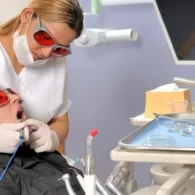
Many confuse the two distinct concepts: cosmetic dentistry and orthodontics. While they are both branches of dentistry, they differ in purpose and approach. Orthodontics improves and corrects irregularities in tooth position in the jaw, whereas cosmetic dentistry improves the overall appearance of teeth.
Both of these treat teeth. But in reality, they deal with complicated dental health issues and structure. Read on to know how these procedures are different from general dentistry.
Cosmetic dentistry has become incredibly popular due to pervasive appearance consciousness, with expert oral care solutions primarily designed to enhance dental aesthetics rather than function itself. The term ‘functional ' refers to ‘aesthetics’.
Typically, a bright smile and good oral health go hand in hand. That’s why most cosmetic dentists use advanced procedures to improve oral health at the start. Then, finally, move on to achieve bright teeth. This process enhances dental appearance by creating uniformity in shape, size, and color.
Types of Cosmetic Dentistry
The most frequently used procedures in cosmetic dentistry include teeth whitening, veneers, fillings, crowns, dental implants, and dental bonding.
Teeth Whitening
Teeth whitening is one of the most basic procedures of cosmetic dentistry. Once the cleansing is done, your tooth surface is bleached.
This process goes a long way in helping people with stained teeth due to smoking, food, or medication. Teeth whitening is also the least expensive teeth cleaning option, providing a far better and longer-lasting solution than other over-the-counter options.
Dental Veneers
Dental veneers are thin white shells, usually made of porcelain, ceramic, or composite resin. They are bonded to the front surface of the tooth using dental cement. They are a good option for stained or chipped teeth and are most often custom-made to suit the patient’s needs.
But dental veneers are a permanent solution and, once done, cannot be reversed. So go for a dental consultation with your dentist before opting for it.
Dental Crowns
Dental crowns, or caps, are one of the most common options for fixing crooked or damaged teeth. This procedure is used when a tooth is too weak or a cavity is too big for a standard filling.
Dental crowns can be made from various materials, including porcelain, ceramics, zirconia, resin, and metal. Metal and porcelain-fused materials are the most commonly preferred options.
The good thing about dental caps is that they provide a natural appearance to teeth and are not easy to. But some patients may react to the metals used in crowns. At times, they might even fall out. These are the drawbacks you should consider before
Inlays and Onlays: Choosing this option means getting indirect fillings, generally used when your tooth is too damaged to support a typical filling.
An inlay is often the best option, especially for cavities. It is usually created in dental labs. In this method, a pre-molded filling is placed inside the grooves of your teeth.
An onlay is used if your tooth is too weak for a normal filling, or the tooth cusps are damaged, and an inlay cannot help. An onlay usually covers the damaged cusps of a partially damaged tooth.
Dental Implants
Tooth implants are an almost-perfect replacement for your natural teeth. This process involves surgery in which a titanium post is placed in the jawbone. For this to work, you need a strong bone structure. Otherwise, you may need bone grafting or augmentation.
After the impltis placedaced,atakes aboutboumonthsthssadjust and healheal before permanententt dencrowncrow is placed.
Dental Bonding
Dental bonding is one of the most popular solutions to repair chipped teeth using composite resin bonding.
Orthodontics
We have now covered all the essential information about procedures in cosmetic dentistry. Let’s find out more about orthodontics.
Orthodontics is a branch of dentistry that predominantly deals with diagnosing, preventing, and correcting bad bites.
It also covers problems such as protruding upper front teeth, overcrowding, deep bites, crossbites, asymmetry, open bites, reverse bites, and even impacted teeth.
Orthodontic treatment typically involves wearing braces and other dental tools. The purpose is to rectify your bite so that your front and back teeth meet evenly.
At this point, it is essential to mention that orthodontic treatment for children begins after 12 years of age wage 12, when teeth start coming out. There is no limit for adults, but with growing older, treatment options become more limited. According to the British Orthodontic Society, there are multiple ways to implement orthodontic procedures.
Fixed tools
Fixed tools keep teeth in place during treatment. Patients can remove them without professional help.
This appliance includes ceramic and lingual braces, palatal expanders, habit appliances, and lower lingual holding arches.
Removable Tools
Removable tools are easy-to-wear dental aids that provide extra support for your teeth.
They include Invisalign aligners, removable retainers, and night braces or headgear.
Functional Braces
Functional braces are usually removable plastic braces designed to interact and stay in place on both the upper and lower jaws. From the procedures to the purpose, they vary in every aspect. Learning about these differences will help you make a well-informed decision.
Get in Touch
Don’t wait for symptoms to worsen. Book your consultation today and take the first step towards better health.

Call Us: +44 1536 206900
Email Us: info@naturalsmiles.co.uk





© 2026 Natural Smiles Corby | All Rights Reserved | Privacy Policy | Digital Marketing by Remedo