



Modern False Teeth – All You Need To Know
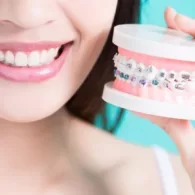
You’ll pay about £200 for partial dentures. The cost varies. Complete dentures take up to two months and 5 dental appointments to complete.
If you’re going to invest that much time and money in false dentures, you must know everything about them. In the next five minutes, learn all you need to know about modern false teeth.
The article will tell you about:
- Types of dentures
- Denture costs
- How long does the process take
- How to take care of the dentures
- Which dental hygiene should you maintain
- How to clean the dentures
- How to eat with dentures
- And much more
Types Of Dentures
Complete Dentures
If all your upper or lower teeth must be removed, the dentist will suggest complete dentures. The dentist offers the dentures weeks or months after the original teeth are removed.
Partial Dentures
If multiple but not all of your teeth are missing, the dentist will offer you partial dentures.
Denture Costs
Cost depends upon whether you want a complete or partial denture, fixed or removable, the materials used, and other factors. However, the treatment comes under the highest treatment band for NHS dental charges: Band 3.
Thus, if you go to an NHS dentist, you must pay £282.80 in England and Wales and £157.60 in Northern Ireland and Scotland. Furthermore, private clinics charge £200 for partial dentures first. The number increases to £5000 for complete dentures.
How Long Does The Process Take?
The right answer? It depends. The dentist must thoroughly assess your problems and determine the best treatment for you. Once done, your dentist can give you a proper timeline.
However, expect the process to take up to 2 months and up to 5 dental appointments.
How To Take Care of The Dentures?
You must wear your dentures at all times—even while sleeping—for the first three to five days. However, your dentist is the best person to offer precise advice.
Afterward, remove dentures at night. The process allows your gums to rest. Also, keep them moist. If you don't, they may dry out and crack.
Leave the dentures in a glass full of water. You can also keep the dentures in a polythene bag with damp cotton. Another option is to use a cleaning solution recommended by your dentist.
Brush your remaining teeth, tongue, and gums twice a day. Furthermore, use fluoride-based toothpaste. It protects you from disease, tooth decay, and other dental problems.
How To Clean The Dentures?
Remove food deposits and plaque from your dentures every day. Miss that, and you’ll suffer from tooth decay, oral thrush, bad breath, and gum disease.
Brush your dentures with toothpaste twice a day before you soak them, and wash them with soap and water to remove food particles
Further, soak your dentures in a fizzy solution of denture-cleaning tablets. The process removes bacteria and stains from the dentures. Afterward, brush them before putting them back on.
Never scrub the dentures hard. Furthermore, keep the dentures in a folded towel or in a bowl or sink filled with water while cleaning. The reason behind the rule is that if you drop them, they can break.
How To Eat With Dentures?
Eat soft foods and chew slowly for the first five days. Furthermore, make sure the food is cut into small pieces. Always use both sides of your mouth to chew food.
Steer clear of sticky foods, chewing gum, hard food, and food that has sharp edges. Afterward, you can return to your old diet. Furthermore, never use toothpicks with false dentures.
Do You Need Denture Adhesives?
Ideally, no. However, if your jawbone has shrunk significantly, denture adhesive is your best friend. Furthermore, some people initially use adhesives.
Consult your dentist on which denture adhesive to use. Furthermore, follow the manufacturer’s instructions to the T. Never use excessive amounts of denture adhesives.
If you find adhesive residue in your mouth, remove it with a cotton wool, a chamois, flannel or a damp kitchen roll. Furthermore, remove residue from the dentures by brushing with soap and water.them
Will Your Speech Get Affected?
The short answer is yes. The dentures affect how your tongue and the air inside your mouth move. Thus, you’ll need 2-Sos to get adjusted to speaking with dentures.
Practicing words out loud. Furthermore, if you hear a clicking sound when you’re speaking, reposition the dentures by gently swallowing or biting down. Follow the same process if your dentures slip when you smile, laugh, or cough.
If the speaking problem persists, consult your cosmetic dentist.
Do You Need To Wear Your Dentures At Night?
In the first couple of weeks, yes. Afterward, take them out and leave them in a glass of water. This keeps them from drying out.
FurthFurthermore,canYous ialso n also a polythene bth damp cotton wool or in a denture cleaning solution as well.
Dentures continue to dominate the market, and many people in the UK wear partial or complete dentures. Furthermore, the Oral Health Foundation confirmed the UK will have over two billion people aged 60 or older by 2050. That will further increase the need for false teeth. Thus, you must have proper knowledge about false teeth.
In this article, you have learnt:
- What types of dentures are there?
- How much do dentures cost?
- The length of the treatment
- The process of denture care
- The dental hygiene should you maintain
- you sho
This will help you make informed decisions.
Get in Touch
Don’t wait for symptoms to worsen. Book your consultation today and take the first step towards better health.

Call Us: +44 1536 206900
Email Us: info@naturalsmiles.co.uk





© 2026 Natural Smiles Corby | All Rights Reserved | Privacy Policy | Digital Marketing by Remedo