



Types of False Teeth That You Can Use To Enhance Your Smile
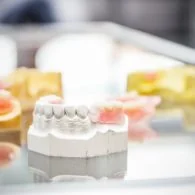
If you have lost some or all of your teeth, it is not the end of the world. Prosthetics are available that can work perfectly for chewing and give you a brilliant smile. These tooth replacements are commonly known as dentures.
They are popularly known as dentures or false teeth. Your choice depends on your budget, whether you have a neighboring tooth, and the health of your remaining teeth.
The location, upper or lower jaw, also matters.
Besides, other factors that play a role include age and usage. It is a complex decision that your dentist should guide you through. This describes the main types of dentures you can get in the United Kingdom.
Types Of Dentures
All dentures can be broadly divided into two types – complete and partial. Dentists prescribe partial dentures when some teeth remain.
Complete
Complete dentures are for older people who have lost most of their pearly whites.
You can see these prostheses on older people’s bedside tables, in a bowl of water when they aren’t being used.
Previously, artificial dentures were made from hard plastic and even porcelain. For the past three decades, Chemidenture has been made from a chemically treated resin material that is as hard as natural teeth. However, in practice, they can sometimes chip. Not to worry. The advantage is that your dental care provider can easily replace individual artificial teeth.
The artificial teeth are on another piece of gum-coloured material that fits your gums exactly. Your dentist takes an impression of your gums in a soft, putty-like material. Even after manufacture, you may have to return them a few times to have them perfectly shaped to your jawbone so prolonged use does not cause discomfort.
These dentures last long but must be replaced as the patient ages, loses bone mass in the jaw, and the jawbone becomes loose-fitting. Let’s check out partial dentures and the cost of partial dentures in the UK.
1. Implant
The most popular type of partial denture is implants. The technique is relatively recent, and it is the closest you can come to having your original tooth back.
Dental implants even have roots, just like normal teeth. The root is a titanium screw used for anchoring.
The screw is fixed into a hole drilled into the jawbone. The procedure requires extensive X-ray imaging and local anesthesia. If a dentist-anesthesiologist is needed, overnight hospital admission may also be advised, but that is rare.
The screw is literally planted into the jaw, and for a few weeks, the bone is allowed to grow back and clasp the screw firmly.
The top of this implant can be used for fitting a crown. The result is exceptionally aesthetically appealing; in fact, more so than the original tooth it replaces.
This is the most effective procedure, with no difference in appearance, stability, or chewing from a natural tooth; that is why it is also the most expensive. Visit the best dentist for implants.
2. Removable
In design, it is the same as a complete denture, but instead of replacing all of the teeth, it only replaces the missing o
The core of the denture is a metal frame that provides support. From the structure, it provides support; clasps extend on either side and anchor themselves on adjoining teeth.
The dentist designs the anchor hooks. The drawback may be some discomfort; you may not feel a foreign object in your mouth.
An alternative to traditional hooks is the flippers. Acrylic is the material of choice for making these, and they use suction to anchor them. The saliva between the flippers and the mouth keeps them in place. Flippers are usually used for a short duration since they are supported only by the gums. Long-term use can lead to gum problems. In addition to the type of false teeth, it's essential to know about different material types. Zirconium oxide is the best material for crowns.
3. Bridge
If only one or two consecutive teeth are missing, dentists depend on a bridge. A variety of dental bridges have been in use for over a century. The most popular are cantilever and traditional designs. The traditional design determines how the load of the artificial tooth passes to the adjoining teeth; externally, both look the same.
The crown material is hard resin or ceramic. A bridge is made to order after accurate measurement. They snap on and can be opened with a push. Aesthetically, they look quite perfect, but the joining teeth begin to age.
Benefit of Dentures
Dentures provide a natural bite. This can have an impact on mental health and, consequently, on income and other aDentures provide prnatural bitedes a nat. Dentures usually keep the upper and lower teeth in place by exerting pressure. If any of the pair is removed, the other jaw’s corresponding tooth begins to come out slowly.
This is known as eruption, and ultimately the healthy tooth has to be pulled out after a few years.
Denture allows chewing. If food is not adequately masticated, digestion suffers. Indigestion: Undigested food causes gas. denture is a must-have for proper nutrition.
Caring for Your False Teeth
They are artificial, but dental implants also need brushing. Plaque can also build up on false teeth quickly.
Flossing, though, is not needed. For removable dentures, soak them in warm water and brush away debris with a toothbrush. Over time, you may notice discoloration; that is natural.
Dentures can develop debris collection over time. You can use a vinegar-and-water solution.
Complete dentures need hydration overnight. Usually, you place them in a glass of water. Your dentist might prescribe a unique solution.
Get in Touch
Don’t wait for symptoms to worsen. Book your consultation today and take the first step towards better health.

Call Us: +44 1536 206900
Email Us: info@naturalsmiles.co.uk





© 2026 Natural Smiles Corby | All Rights Reserved | Privacy Policy | Digital Marketing by Remedo