



Dental Bridges: Exploring the Different Types and the Superiority of Implanted Bridges
Dental bridges are a common and effective solution for replacing missing teeth, restoring both the function and aesthetics of a patient’s smile. When one or more teeth are lost due to injury, decay, or other factors, a dental bridge can help to fill the gap, preventing the surrounding teeth from shifting and maintaining proper bite alignment. At Natural Smiles in Leicester, we offer a range of dental bridge options to suit our patients' unique needs and preferences. In this article, we’ll explore the different types of dental bridges available and discuss why implanted bridges should be considered the gold standard in modern dentistry.
Types of Dental Bridges
Several types of dental bridges exist, each with its own advantages and disadvantages.
The most common types include:
1. Traditional Bridges
A traditional dental bridge consists of one or more prosthetic teeth (pontics) supported by dental crowns on either side. The crowns are placed on the natural teeth adjacent to the gap, known as abutment teeth, and the pontics are suspended between them to fill the space left by the missing teeth.
Pros:
- Strong and stable solution for replacing missing teeth
- Can be made from a variety of materials, including porcelain, ceramic, or metal alloys
- Provides a natural-looking appearance that blends seamlessly with surrounding teeth
- Typically less expensive than implanted bridges
Cons:
- Requires the removal of healthy tooth structure from the abutment teeth to accommodate the crowns
- Abutment teeth may be more susceptible to decay and gum disease due to the increased difficulty in cleaning around the crowns.
- May place additional stress on the abutment teeth, potentially leading to further damage or loss over time
2. Cantilever Bridges
A cantilever bridge is similar to a traditional bridge, but it is supported by a dental crown on only one side of the gap. This type of bridge is typically used when there are healthy teeth available on just one side of the missing tooth or teeth.
Pros:
- Requires less preparation of the surrounding teeth compared to a traditional bridge
- Can be a good option when there are no healthy teeth on one side of the gap
Cons:
- Places more stress on the supporting abutment tooth, increasing the risk of damage or failure over time
- May not be suitable for replacing multiple missing teeth or teeth located in the back of the mouth, where biting forces are greater
3. Maryland Bridges (Resin-Bonded Bridges)
A Maryland bridge, also known as a resin-bonded bridge, consists of a pontic that is attached to metal or ceramic wings on either side. These wings are then bonded to the backs of the adjacent natural teeth, providing support for the prosthetic tooth.
Pros:
- Minimally invasive, as it requires little to no preparation of the surrounding teeth
- Can be a good option for replacing front teeth, where aesthetics are a key concern
- Generally less expensive than traditional or implanted bridges
Cons:
- May not be as strong or durable as other types of bridges, particularly in areas of high biting force
- The bonding process may not provide the same level of stability as crowns or implants.s
- The metal or ceramic wings may be visible when smiling or speaking, compromising the natural appearance of therestorationi.on
4. Implanted Bridges
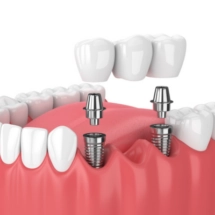
An implanted bridge, also known as an implant-supported bridge, is a dental prosthesis that is supported by dental implants rather than natural teeth. Dental implants are small, titanium posts that are surgically placed into the jawbone to act as artificial tooth roots. The implants fuse with the bone through osseointegration, providing a stable and secure foundation for the bridge.
Pros:
- Provides the most natural look, feel, and function compared to other types of bridges
- Preserves the integrity of the surrounding natural teeth, as there is no need to remove healthy tooth structure for crowns or bonding
- Stimulates the jawbone, preventing bone loss and maintaining facial structure
- Offers unmatched stability and durability, with the potential to last a lifetime with proper care
- Allows for easier cleaning and maintenance of oral hygiene compared to other bridge types
Cons:
- Requires a surgical procedure to place the dental implants, which may not be suitable for all patients
- Typically more expensive than other types of bridges, at least initially
- May require a longer treatment timeline, as the implants need time to fuse with the jawbone before the final bridge can be placed
The Case for Implanted Bridges as the Gold Standard
At Natural Smiles, we believe that implanted bridges should be considered the gold standard for replacing missing teeth in most cases.
Here’s why:
1. Preservation of Natural Tooth Structure
One of the most significant advantages of implanted bridges is that they do not rely on the surrounding natural teeth for support. Traditional and cantilever bridges require the removal of healthy tooth structures from the abutment teeth to accommodate the crowns, which can weaken these teeth and make them more susceptible to decay and damage over time. Maryland bridges, while less invasive, still require the bonding of wings to the backs of the adjacent teeth, which can compromise their strength and integrity.
Implanted bridges, on the other hand, are entirely self-supporting, as they are anchored directly into the jawbone by dental implants. This means that the surrounding natural teeth can remain intact, preserving their strength, health, and function.
2. Jawbone Preservation
When a tooth is lost, the jawbone in that area begins to deteriorate due to a lack of stimulation. This bone loss can lead to a cascading effect, causing the surrounding teeth to shift, the facial structure to change, and the risk of further tooth loss to increase. Traditional bridges and other tooth-replacement options that do not replace the tooth root do nothing to address this issue, and in some cases, may even accelerate bone loss by placing additional stress on the surrounding teeth.
Dental implants, the foundation of implanted bridges, are the only tooth-replacement option that can halt and even reverse jawbone deterioration. The titanium implant posts stimulate the bone tissue, encouraging new growth and maintaining the integrity of the jawbone. This not only provides a stable base for the bridge but also helps to preserve the patient’s natural facial structure and appearance.
3. Longevity and Durability
Implanted bridges are designed to last a lifetime with proper care and maintenance. The dental implants that support the bridge are made from biocompatible titanium, which fuses with the jawbone to create an incredibly strong and stable foundation. The bridge itself can be made from a variety of durable materials, such as porcelain or zirconia, which are resistant to wear, staining, and fracture.
In contrast, traditional bridges typically have a lifespan of 5–15 years, depending on factors such as oral hygiene, diet, and the health of the abutment teeth. Maryland bridges and cantilever bridges may have even shorter lifespans due to the increased stress placed on the supporting teeth.
4. Enhanced Comfort and Function
Implanted bridges offer a level of comfort and function that closely mimics that of natural teeth. Because the bridge is anchored securely into the jawbone, patients can bite, chew, and speak with confidence, without worrying about the bridge slipping or shifting. This stability also allows for better distribution of biting forces, reducing the risk of damage to the surrounding teeth and promoting a more balanced, comfortable bite.
Other types of bridges, particularly those that rely on bonding or crowns for support, may not provide the same level of comfort and function. Patients may experience some movement or instability in the bridge, which can lead to discomfort, difficulty eating, or even changes in speech.
5. Improved Oral Hygiene
Maintaining good oral hygiene is essential for the longevity of any dental restoration, as well as for the overall health of the teeth and gums. Implanted bridges make it easier for patients to keep their teeth and gums clean, as there are no special tools or techniques required to clean around the bridge.
Traditional bridges, on the other hand, can make it more difficult to clean the abutment teeth and the area underneath the pontics. This can lead to an increased risk of decay and gum disease, which can ultimately compromise the stability and longevity of the bridge.
Conclusion
At Natural Smiles in Leicester, we understand that every patient’s needs and preferences are unique. That’s why we offer a range of dental bridge options, including traditional bridges, cantilever bridges, Maryland bridges, and implanted bridges. However, we believe that implanted bridges should be considered the gold standard for replacing missing teeth in most cases.
The advantages of implanted bridges, including the preservation of natural tooth structure, jawbone preservation, longevity and durability, enhanced comfort and function, and improved oral hygiene, make them the superior choice for patients who are good candidates for dental implants.
If you are missing one or more teeth and are considering your tooth replacement options, we encourage you to schedule a consultation with our experienced dental team at Natural Smiles. We will work closely with you to evaluate your oral health, discuss your goals and concerns, and recommend the best course of treatment to restore your smile and your quality of life. With our state-of-the-art facilities, cutting-edge technology, and compassionate care, we are committed to helping you achieve the healthy, beautiful smile you deserve.
Get in Touch
Don’t wait for symptoms to worsen. Book your consultation today and take the first step towards better health.

Call Us: +44 1536 206900
Email Us: info@naturalsmiles.co.uk





© 2026 Natural Smiles Corby | All Rights Reserved | Privacy Policy | Digital Marketing by Remedo